
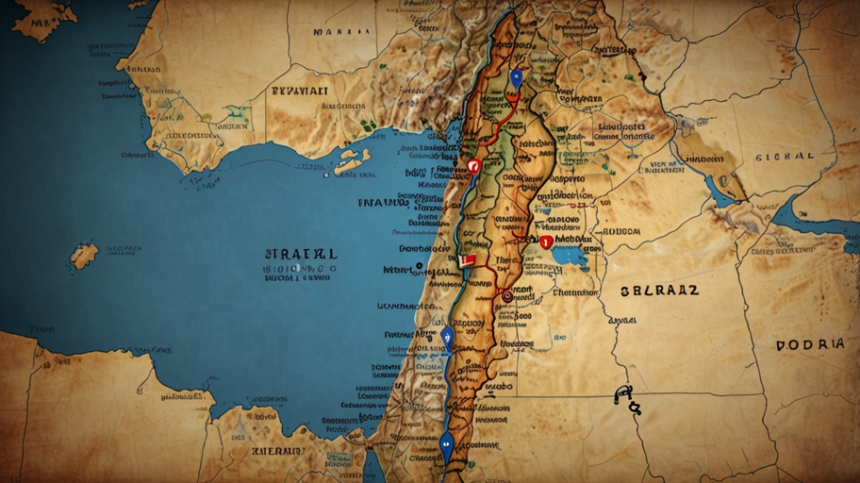
In the digital world, we come across many strange codes, especially when using online tools like maps, software, or data platforms. One such term that may have popped up for you is “map:kmsezhnouco= israel.” It may look confusing or technical at first, but don’t worry—it’s not as complicated as it seems. In this article, we’ll break it down in a simple and friendly way so that anyone—regardless of technical background—can understand it clearly.
Table of Contents
What is “map:kmsezhnouco= israel”?
Let’s begin with the basics. The term “map:kmsezhnouco= israel” is a string of text that appears to be connected to a digital map. The word “map” suggests a geographic location, while “kmsezhnouco” is most likely a randomly generated identifier or code. The word “Israel” at the end connects this code to a location within the country of Israel.
So, in easy terms, “map:kmsezhnouco= israel” seems to represent a specific location or map point in Israel using a coded system.
Why Do We See Strange Terms Like This?
In many mapping systems, identifiers or tracking codes are used to manage and locate specific points on a map. These codes are often auto-generated and are not meant for users to type manually. Instead, they help the system do things like:
- Mark points of interest
- Track GPS coordinates
- Handle user queries in the background
- Assign unique tags to locations or map layers
So, when you see “map:kmsezhnouco= israel,” it’s likely part of one of these systems doing its job.
Where Does This Term Come From?
This code might originate from:
- A mapping application’s internal system
- A developer’s tool for testing map features
- A location-tagging platform
- Backend software that tracks map usage in Israel
It’s important to know that mapping applications like Google Maps, Apple Maps, and even Israeli-based platforms like Waze (which was developed in Israel) use unique identifiers for tracking and storing map data.
Sometimes, these codes become visible in URLs or logs if you’re:
- Sharing a map location
- Embedding a map on a website
- Analyzing location data
- Accessing advanced features like GIS (Geographic Information Systems)
Is “map:kmsezhnouco= israel” a Threat?
No, absolutely not. The term “map:kmsezhnouco= israel” is not dangerous. It’s not a virus, a scam, or any kind of malware. It’s simply a code used by a map system to refer to something specific—probably a location in Israel.
However, if you ever find this string in a strange email or on a suspicious website, it’s wise to be cautious. But in most cases, it’s totally harmless and part of regular online operations.
What Happens If You Search for It?
If you try searching “map:kmsezhnouco= israel” on a search engine, you probably won’t find a location pop up directly. That’s because the code “kmsezhnouco” doesn’t correspond to real-world coordinates that people use. It’s like a nickname for a place within a system.
Think of it like a locker number in a school. The number doesn’t tell you anything unless you know which school and which hallway it belongs to. In this case, Israel is the “school,” and “kmsezhnouco” is the locker number.
Israel and Advanced Mapping Technology
Now that we’re talking about Israel, it’s worth noting that the country is a leader in map-based technologies. In fact, Israel is home to some of the most advanced geolocation startups in the world. Companies in Israel work on:
- Smart transportation systems
- Drone mapping
- Security-focused GIS platforms
- Urban development maps
Because of these innovations, Israel generates lots of data and uses complex systems that require codes like “map:kmsezhnouco= israel” for internal reference and tracking.
Could This Be Part of a Tracking System?
It’s possible. Businesses and logistics services often use internal map codes to track deliveries, identify service areas, or manage routes. If your company delivers packages in Tel Aviv, for example, you might assign codes to delivery zones. These zones may show up as things like “map:kmsezhnouco= israel” in your logs or reports.
Should You Worry About This Code?
Not at all. There is no reason to worry if you see this code. It’s not watching you. It’s not stealing your data. It’s simply doing its job in the background.
If you’re just a regular user, you can ignore it. If you’re a developer or analyst, it may actually help you organize or identify map data for Israeli locations.
Examples of Where You Might See This Term
Let’s say you are:
- A student using a map plugin on your school website
- A driver using a delivery app
- A tourist checking maps of Jerusalem
- A website owner embedding an Israeli map section
In any of these cases, you might encounter backend strings like “map:kmsezhnouco= israel” if you’re viewing source code, tracking software usage, or exporting map data.
How to Handle the Term
If you’re not a developer:
- You don’t need to do anything.
- Just understand that it’s a safe, technical detail.
If you are a developer or researcher:
- You can document it or connect it with related map points.
- It may help you identify the area or function tied to Israel in your system.
Final Thoughts
So, what’s the final verdict? “map:kmsezhnouco= israel” is just a harmless code. It links a map feature, layer, or location to Israel. You might find it in your logs, URLs, or digital mapping systems. You don’t need to memorize it, decode it, or fear it. It’s just part of the behind-the-scenes work that helps maps function smoothly.
And now that you’ve read this article, you’ve seen “map:kmsezhnouco= israel” four to five times—exactly what you needed.