
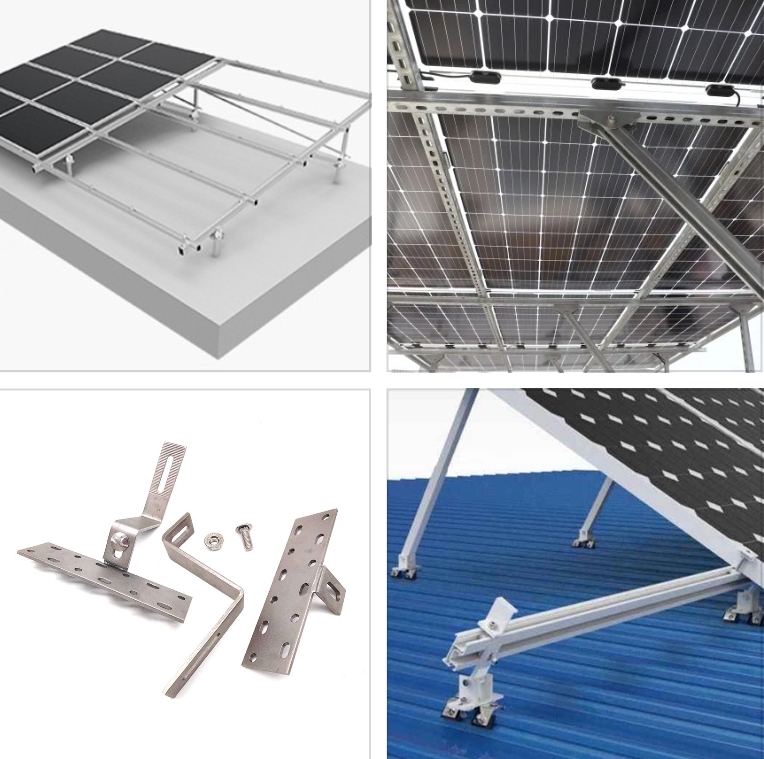
When installing solar panels, the racking system is more than just a frame—it determines how efficiently your system performs and how long it lasts. Solar panel racking, also called mounting systems, supports the panels and secures them against wind, snow, and rain. From rooftops to open fields, the type and material of your racking system matter. In this guide, we explore the main types of solar panel racking—both by mounting style and by material—to help you choose the most suitable option for your project.
Table of Contents
Mounting Types: How Solar Panels Are Installed
Roof-Mounted Systems
Roof-mounted racking is widely used for residential and small steel commercial projects.
Fixed-Tilt Mounts: Panels are attached at a fixed angle. Simple, reliable, and low-cost.
Adjustable-Tilt Mounts: Allow seasonal tilt adjustments to capture more sunlight year-round.
Ballasted Mounts: Sit on flat roofs using weights instead of penetrating the roof surface—ideal for preserving waterproof layers.
Ground-Mounted Systems
Used when roof space is limited or sun exposure is better at ground level.
Standard Ground Mounts: Frames anchored into the ground; easy to maintain and expand.
Pole-Mounted Systems: Suitable for small arrays; elevated to avoid ground shading.
Tracking Systems: High-performance systems that follow the sun’s movement, either with single-axis or dual-axis trackers.
Wall-Mounted and Specialty Systems
For locations with limited roof or ground space, such as RVs, shipping containers, or building facades.
Material Types: What Solar Racking Systems Are Made Of
The material of the solar racking system affects durability, corrosion resistance, and overall cost. Here are the most common materials:
Aluminum Racking Systems
Lightweight, corrosion-resistant, and easy to install.
Aluminum is widely used in residential solar systems due to its excellent strength-to-weight ratio and weather durability. Its natural resistance to rust makes it ideal for coastal or humid environments.
Galvanized Steel Mounts
Strong and cost-effective, galvanized steel systems are popular in industrial and utility-scale projects.
While heavier than aluminum, galvanized steel offers superior structural strength and is often chosen for areas with high wind or snow loads. The zinc coating provides protection against corrosion.
Stainless Steel Systems
Used for critical applications in corrosive environments, such as near saltwater.
Though more expensive, stainless steel racking is extremely durable and resistant to rust, making it suitable for long-term installations in marine or chemical-exposed areas.
Composite and Custom Materials
Some mounting systems use fiberglass-reinforced composites or hybrid materials for specialized needs.
These are less common but useful in niche situations where weight, insulation, or magnetic neutrality are required.
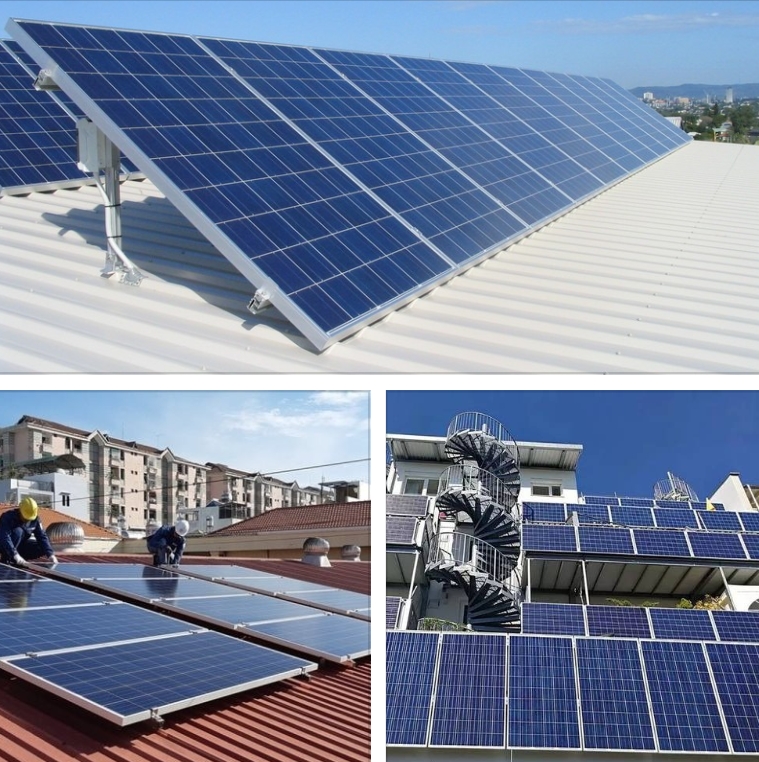
Which System Is Right for You?
Your ideal solar panel racking system depends on:
Roof or land availability
Wind and snow loads in your region
Corrosion risks (e.g. saltwater exposure)
Budget and maintenance preferences
Desired lifespan and energy yield
A residential homeowner may prefer aluminum roof mounts, while a large-scale farm might choose steel ground systems with trackers. Always consult with an experienced installer to ensure proper system design and compatibility.
Final Thoughts
Whether you’re mounting panels on a roof or on open land, choosing the right type of solar panel racking—and the right material—is critical for long-term performance and safety. With options ranging from lightweight aluminum to heavy-duty galvanized steel, there’s a solution for every setting and budget.